The Art of Making Art
The process of creating can be different for each project, but most start with an idea that bubbles away for days, weeks or months.
It just sits there, and I’m thinking about it, even when I’m not, if you know what I mean. Then as fast as the idea arrives, so does the feeling that I have to start.
Why do I paint?
Painting changes the way you look at the world. You focus more on details, beautiful small details because that’s what inspires you … at least that’s the way it is for me.
Capturing those details on canvas makes my soul happy. I love the process of transforming a plain white canvas into a piece of art that has been living inside my heart and mind. Some works surprise me – I didn’t know I had that in me.
There’s a lot of ugliness in the world at the moment and creating allows me to focus on what is beautiful.
What inspires me?
As cliche as it for an artist, I get a lot of my inspiration from nature. What really captures my attention is how light, shadows and colours interact with different shapes. In my mind it’s almost as though Mother Nature is shining a spotlight on something and I can’t look away.
I take a picture to record my inspiration or make a scribble of what it was that caught my eye. That inspiration usually percolates away in my brain for a while, unless I’ve visited a place that has me so intrigued, I have to start creating straight away.
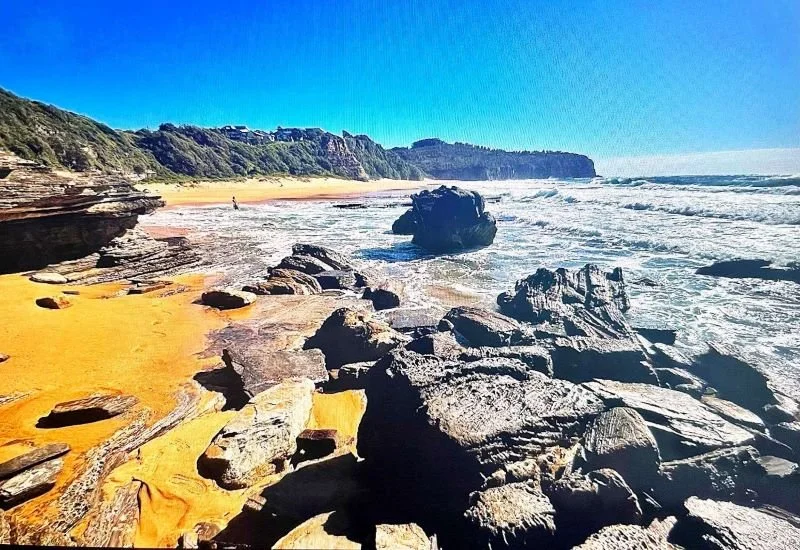
A spur of the moment drive down the coast is inspiration for a new painting.
Where do my ideas come from?
Visiting new places, images, bushwalks, rain, driving around or conversations with people all fill my well of ideas. I never seem to have a shortage of ideas. What I have is a shortage of time and energy to create the amount of work that I would like.
There’s always a lot going on in my head so I write down my ideas. I used to use a notebook, then I had all these pages of ideas that I would have to flip through to find what I wanted. Now I use an app call Mem which allows me to keep track of my ideas better. I can sort them using tags and then search for what I think will be useful in the moment. I can also add pics and links to refer back to for more details.

Snapped this little beach during lunch at a cafe. It might not look like much, but with a bit of rejigging it will make a good painting.
I also collect things - bits and pieces that I’ve found while walking. Bark, leaves, bird nests, feathers, stones and other stuff that takes my fancy. Even as a kid I collected things (the same type of things I collect now oddly enough). My collection of found objects (or happy junk as my husband calls it) sits around my studio and then one day I look at an object from a different angle, see something in the item I hadn’t seen before and a new idea emerges.
Where do I work?
I’m mostly a studio artist who works from photographs or drawings. I like to take pictures especially of places I’m visiting and these will often become the subject of my paintings. I have a huge number of reference photos because I always see new and interesting things – different rock formations, slight differences in beach sand and pebbles, unusual cloud formation and the list goes on. These pictures are only of value to me and no matter how badly they appear, all I have to do is take one look at the pic and I know instantly what made me take the photograph. It re-inspires me all over again.
Sometimes I will do sketches, but I find photography is a more immediate way of capturing a place.
So, what’s my actual painting process?
I paint on stretched and flat primed canvas. Using a photograph, or two or three as a reference I will draw the elements I like onto the canvas. I move things about so they balance and feel right. Rarely do I paint exactly what is in a picture. The picture only provides positioning for things such as land, rocks, water and cloud shapes. That’s what I like about painting. I can manipulate a subject into the creation I see in my mind’s eye.
Once I have a rough, but fairly detailed outline of the picture the painting starts, light at first and building up layer by layer. I always begin with the land or ocean first and then move to the sky. I like to fill the canvas quite quickly so I can get a better feel for the scene – I can see what is working and what isn’t.
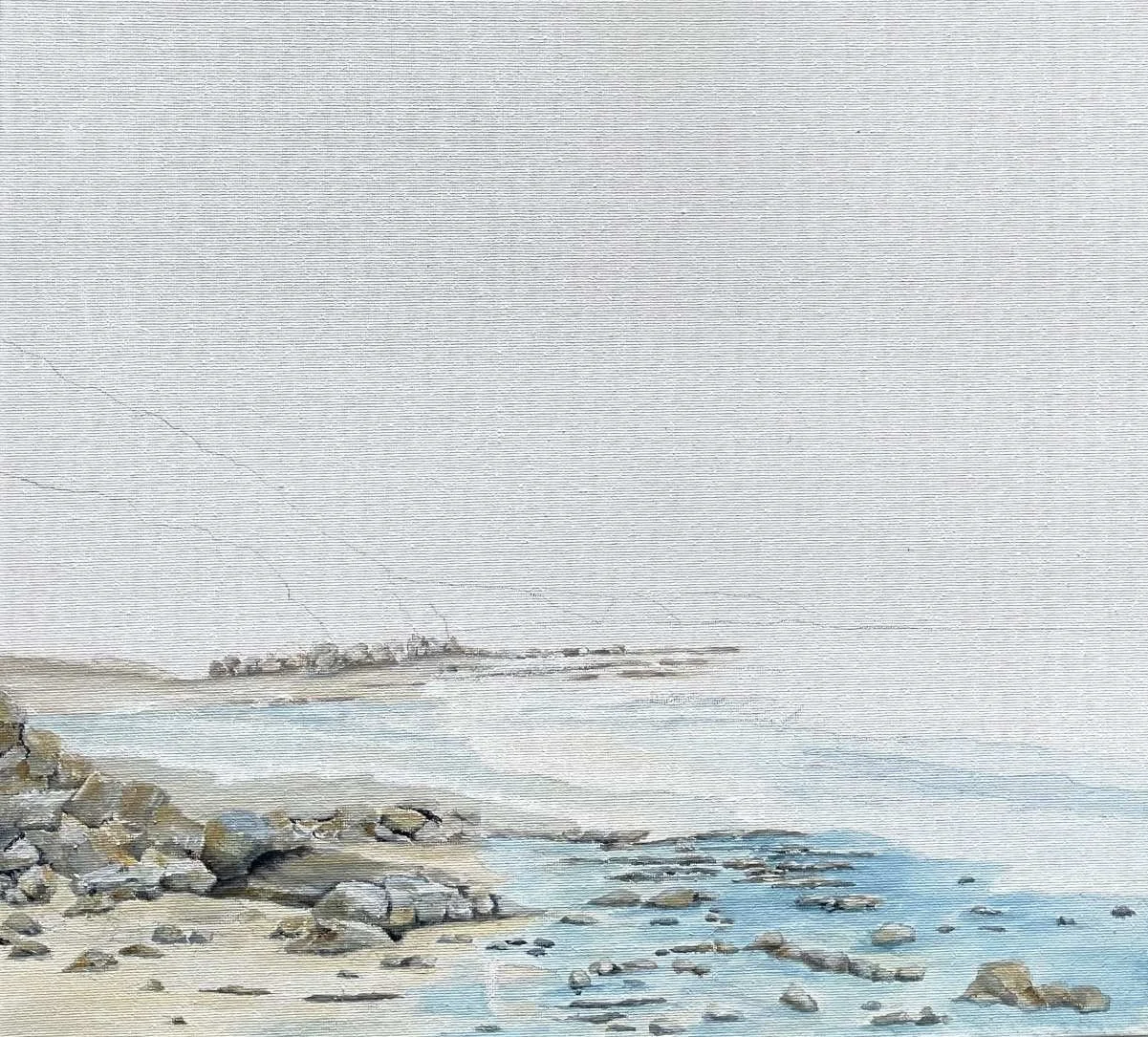
The early stages of a new painting inspired by a trip down the South Coast of NSW.
My stretched canvas paintings have gallery edges, (the painting continues down the sides), and this is the point when I start to roughly paint these in.
At this point I take a break from painting and let the work live by hanging or sitting it against a wall. I need the break to stand back, see the painting from a distance, different angles and get a better perspective on how the elements are coming together.
From there I continue working around the painting trying to balance the colours and subject. This is following by fine tuning the details.
It’s hard to say how long it takes to finish a painting. Sometimes its one or two days, other times it can be weeks. It depends on how much time I have to paint that week and my other responsibilities. I do paint every day, but sometimes it can be for as little as half and hour.
What does my day look like?
Working as an artist is the same as having a full-time job, and I try to treat it as a job – albeit one I love. Even when I don’t feel like it, I still show up in my studio.
Sunday is my weekly planning day. I learned the hard way and now plan what I need to get done and how much time I can allow myself to complete a task. Sunday sets the structure for the week
I have found that if I have not totally planned out my day, I am not very productive – actually that’s an understatement. I will spend my time going in all different directions, this leads to a blow out of painting time per project and other, more boring responsibilities such as admin work just not getting done (accounting can be so boring).
My day starts early, usually 5 AM. At that time, I have a few coffees, review my day, do some social media work, emails, walk, water the garden, and do a few chores. Sometimes if an idea is really bugging me, I will sit on the sofa and sketch what’s in my mind.
It’s important to me that I be there with my family before they go off to school and work, so I don’t go into my studio until 8 or 9 AM.
When I’m in the studio I always start working on my most important task for that day first. Lately it’s been working on my website, but other days I need to make progress on a painting, write product descriptions or photograph a few pieces. I always feel better when I have that task completed. Keeping to my schedule makes me work faster because I know that I have other things that need to get done.
My “in-studio” work day ends by 3:30 PM. By then my brain is tired and my family has started arriving home.
I don’t know how other artists function, but that seems to be the best way to balance work and home for me. Like many other small business owners you will often find me packaging order, doing social media posts or updating spreadsheets after dinner.
My day is pretty much the same as any other working person, with the exception that the work I do is on the creative side.